


 721
721Zeiss surgical microscopes (OPMI) and slit lamps: achieve TOP image and video quality with modern mirrorless system cameras
With the cutting-edge technology found in modern mirrorless system cameras, users can significantly improve the quality of their micro and macro images. These cameras are exceptionally powerful and versatile, and because they are produced in large quantities, they also offer an excellent price-performance ratio. For these reasons, they are a perfect choice for demanding microscopy tasks and are valued by many professional users who prioritise superior image quality.
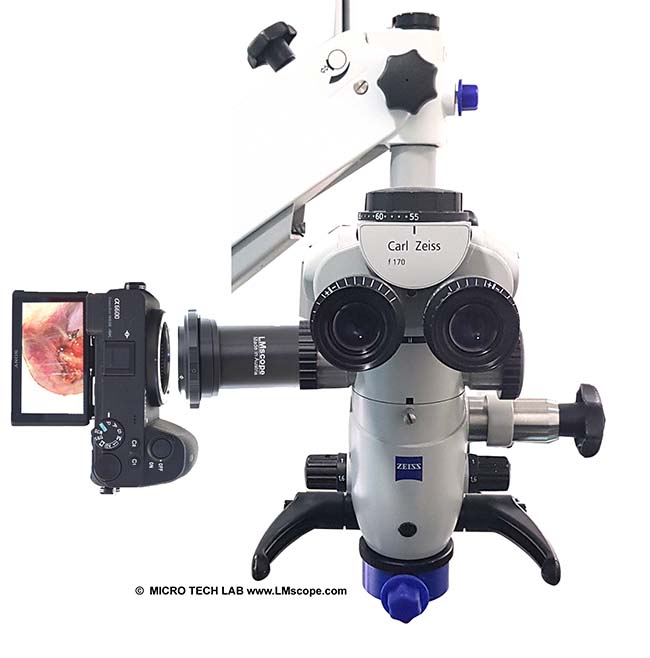
With our professional wide-field microscope adapters featuring integrated precision optics, almost any mirrorless system camera or digital SLR camera can be used with a Zeiss microscope. The adapter solutions are equipped with powerful wide-field optics, which enable the camera to capture a large field of view without any peripheral darkening (vignetting). The lenses used in the adapter solutions have a large diameter and therefore provide high light gathering power.
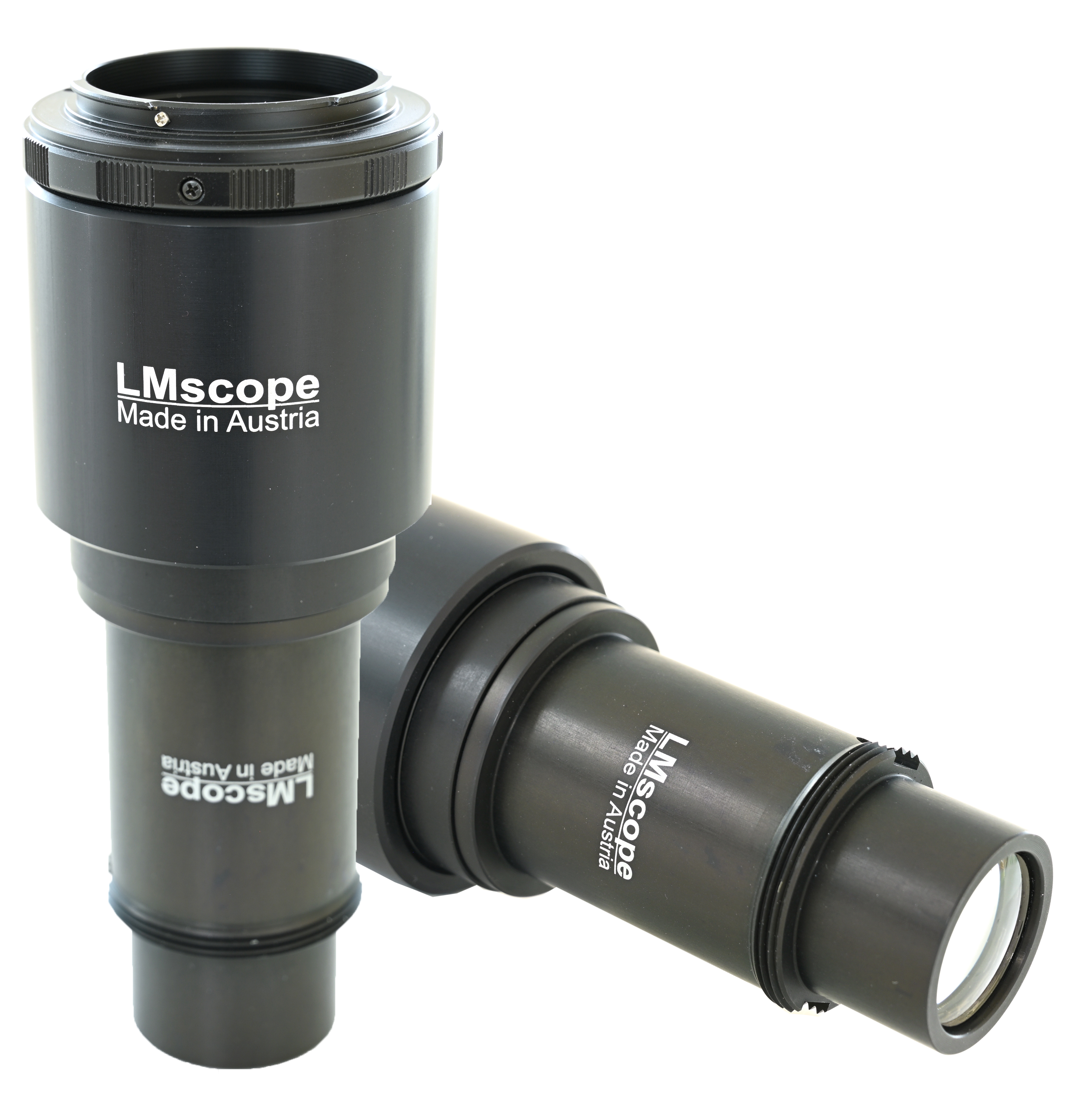
Key features of the LM microscope adapters:
- Precision wide-field optics for an extra-large field of view (without vignetting)
- Large lens diameter for even more light gathering power
- Very compact, short design
- Modular design facilitates maximum flexibility / interchangeable camera bayonet adapter
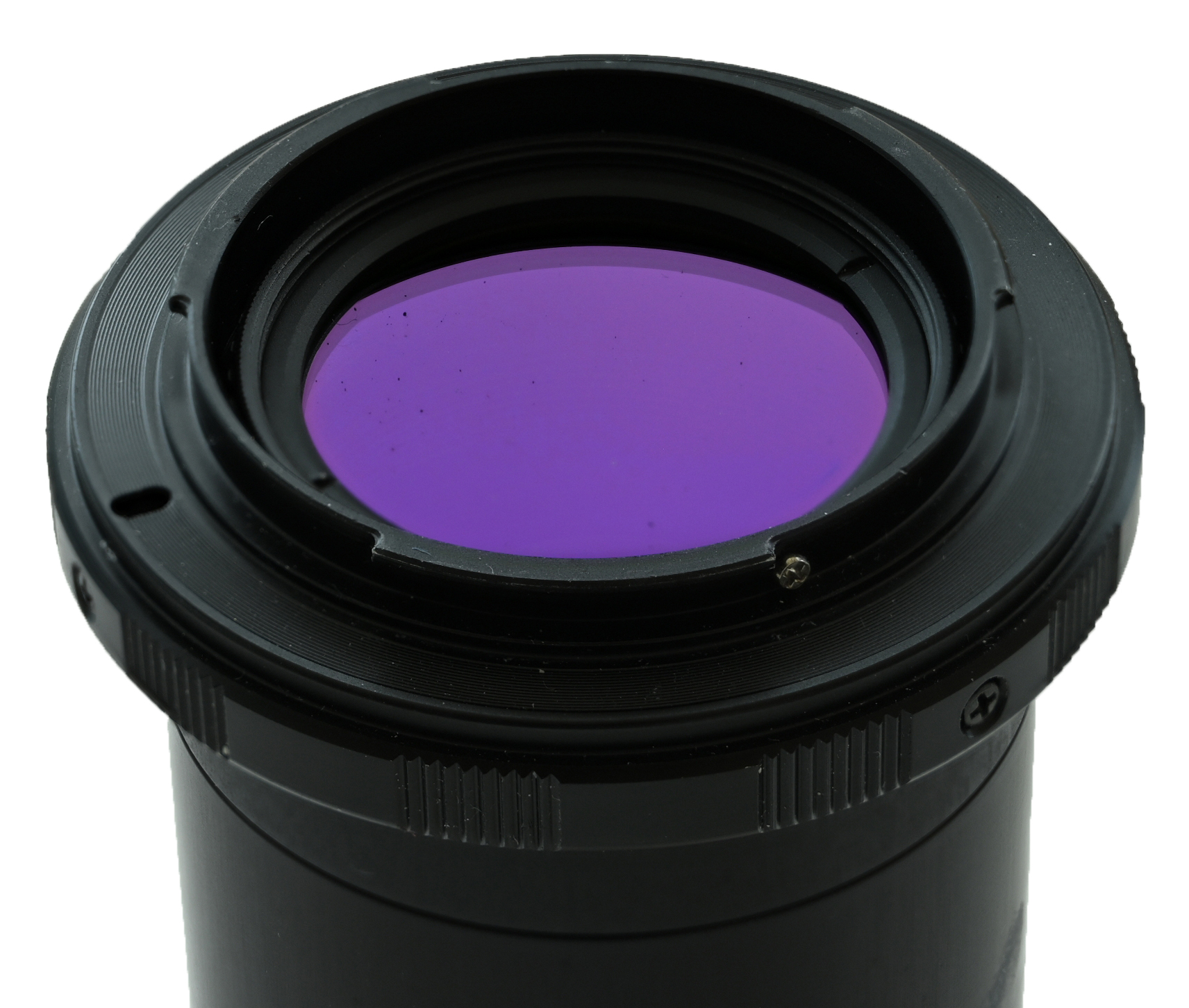
- Integrated filter holder with a 37 mm connecting thread for adding optical filters
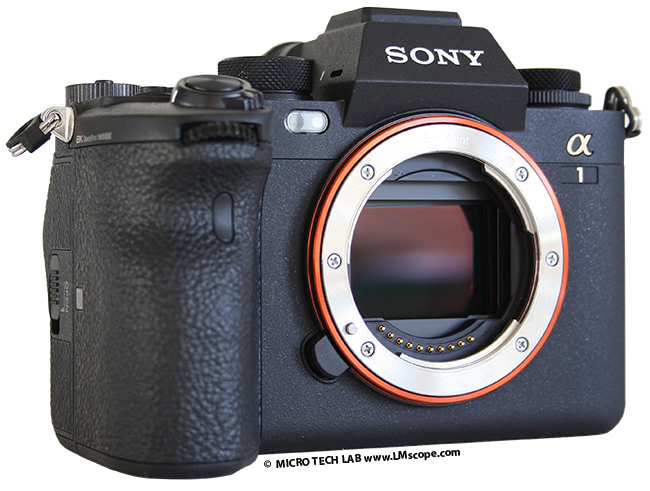
Key features of the TOP mirrorless system cameras:
- State-of-the-art image sensors with up to 100 megapixels
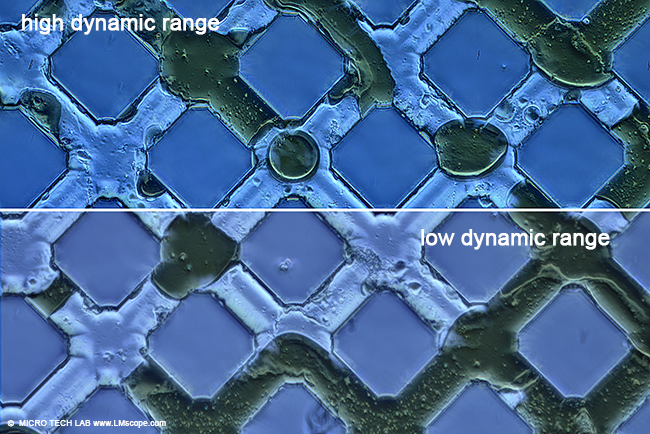
- Extensive dynamic range due to large sensor formats
- Superior ISO performance
- Ability to capture even moving objects with pinpoint clarity thanks to shutter speeds of up to 1/80,000 of a second or global shutter technology
- Optional: exposure synchronisation with external light sources (flash, LED flash)
- Integrated powerful automatic exposure control
- With an integrated display system, these cameras work standalone, freeing the user from the need for a computer
- Video recording in Ultra HD (4K/8K) format
- Live video output to external high-resolution monitors in 4K or 8K quality
- Up to 120 fps in continuous shooting mode at maximum resolution
- Network connectivity: camera can be controlled via LAN or Wi-Fi
- Remote shooting: shoots can be controlled remotely in Live View mode on a PC or Mac
Why is the image quality delivered by mirrorless system cameras so much better than that of conventional C-mount microscope cameras?
Mirrorless system cameras (DSLMs) use large, high-quality image sensors – typically full-frame or APS-C formats. This larger sensor size translates to superior dynamic range and increased light sensitivity. The cycle of innovation in this field is very short, with the latest technological advancements rapidly making their way into cameras.
Contemporary DSLMs are powered by high-performance processors capable of handling huge amounts of data in real-time. The economies of scale from mass production, combined with relentless market competition, have led to more affordable prices for consumers.
When using mirrorless system cameras with Zeiss surgical microscopes, users can benefit from the exceptional performance of this camera class. Surgical microscopes generally use lower magnification levels, typically up to 50x. At these magnifications, contemporary mirrorless system cameras with full-frame sensors and a slightly higher pixel count ranging from 40 to 60 megapixels deliver the best results. This brings out the smallest details in the image with greater precision, even at low magnifications.
For routine tasks in medical settings where the subject, i.e., the patient, is never perfectly still, the ability to capture perfectly sharp images is of central importance.
A common practice in these instances is to optimise the lighting setup using various lighting tools. Cameras optimised for sports and press photography are adept at capturing crystal-clear images, even when faced with difficult shooting conditions (moving objects and poor lighting).
The key to success is using short exposure times – facilitated by a light-sensitive image sensor – and fast processing using high-performance processors. Modern DSLMs are equipped with a digital shutter, allowing for extremely short exposure times of up to around 1/80,000 of a second. These cameras also come with advanced automatic exposure features, enabling the camera to select the optimal exposure time without any manual input needed.
Camera systems are getting faster with each passing year. In 2024, Sony achieved a new milestone by launching the Alpha 9 III, the world’s first full-frame mirrorless camera equipped with a global shutter image sensor. Instead of reading out the image sensor line by line, which was the prior standard, the global shutter technology reads out the entire sensor at once. This offers significant advantages for capturing moving object and enhances image sharpness.
Another important point is the capability to stream the live image in high resolution to a computer or TV screen. Contemporary cameras can be connected directly to a monitor using an HDMI cable. High-performance models are capable of transferring image data in 4K or even 8K. Many high-quality cameras also offer the option of transmitting image information without data loss (uncompressed HDMI). Uncompressed HDMI mode delivers the highest possible image quality, characterized by high pixel density and an expansive dynamic range.
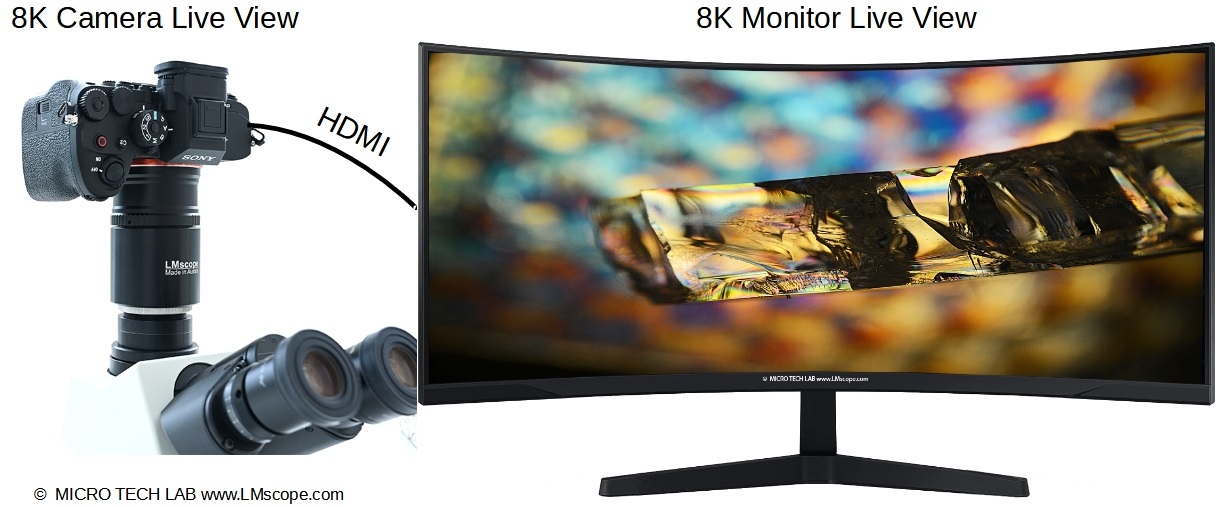
Resolutions:
4K (UHD): 3840 x 2160 Pixel
8K (UHD-2): 7680 x 4320 Pixel

Example application: Zeiss OPMI microscope with LM wide-field DSLR adapter and mirrorless Sony Alpha full-frame system camera
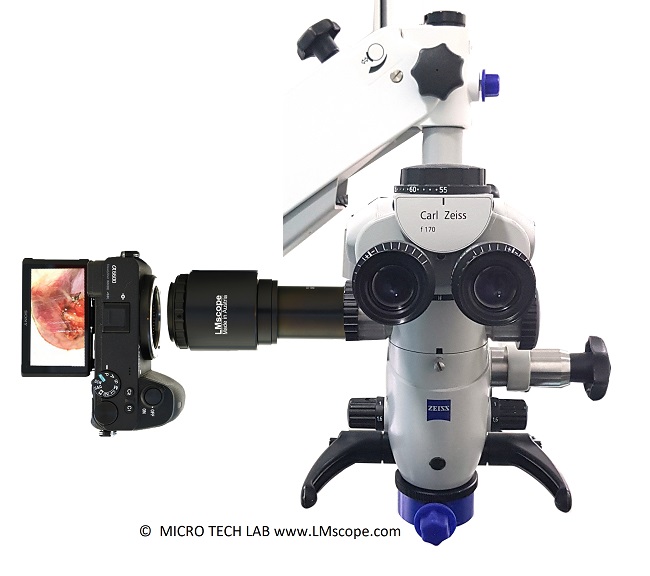
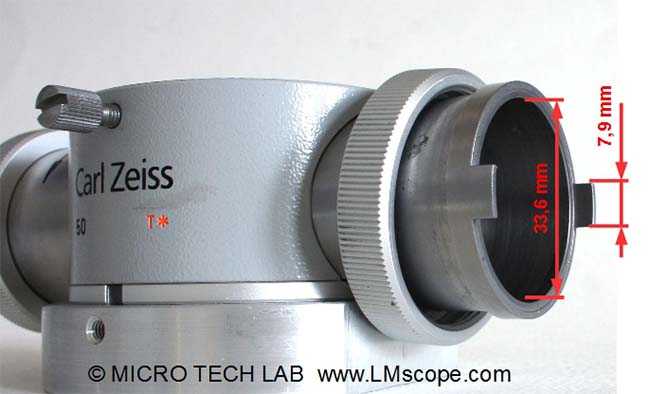
We have developed our microscope adapters for the Zeiss phototube with 33 mm internal diameter. Please make sure that your phototube matches the connection dimensions shown in the image below. Depending on the model of your microscope, the design and colour of the beam splitter may vary.
Our adapter solution is attached directly to this connection. If you don’t already have one, we recommend purchasing it from a microscope dealer or second-hand on eBay.
Depending on the sensor size (full-frame, APS-C, M43), we can offer a range of different adapter solutions. Each of them is optimised for the specific sensor format and delivers maximum image quality and a large field of view without vignetting. The adapter features high-quality wide-field precision optics.
Thanks to its modular construction, the adapter solution is versatile and adaptable. The bayonet adapter is interchangeable, and we offer these camera connections in our lineup.
1.) Adapter solution for cameras with APS-C sensor:
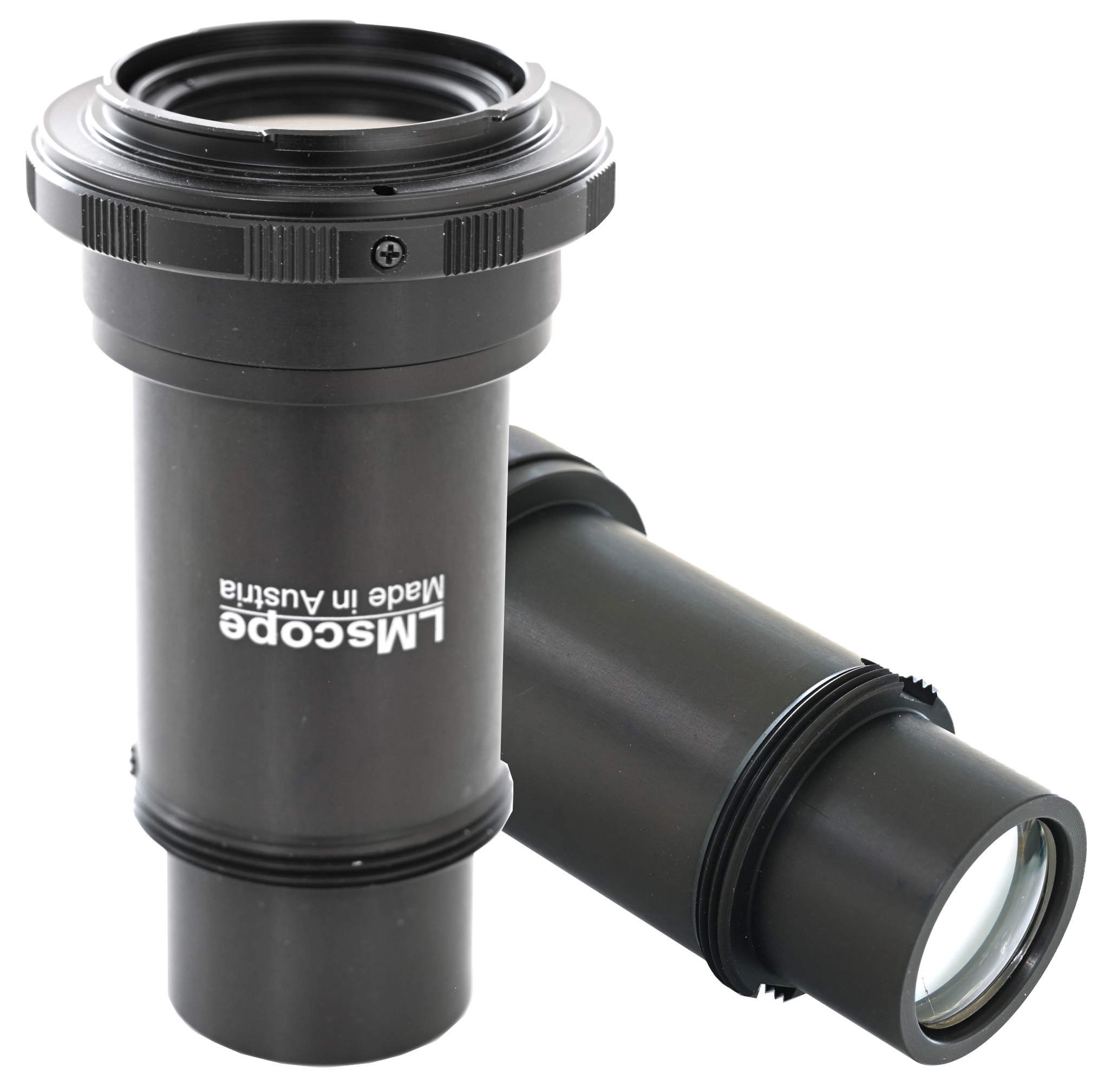
2.) Adapter solution for cameras with full-frame sensor:
The adapter comes with a filter holder with a 37 mm internal thread as standard. This offers the option of adding optical filters such as polarising filters, colour filters or UV filters in just a few quick and easy steps.
Example application: older Zeiss slit lamp (ophthalmology) with a Sony mirrorless system camera (APS-C sensor format)
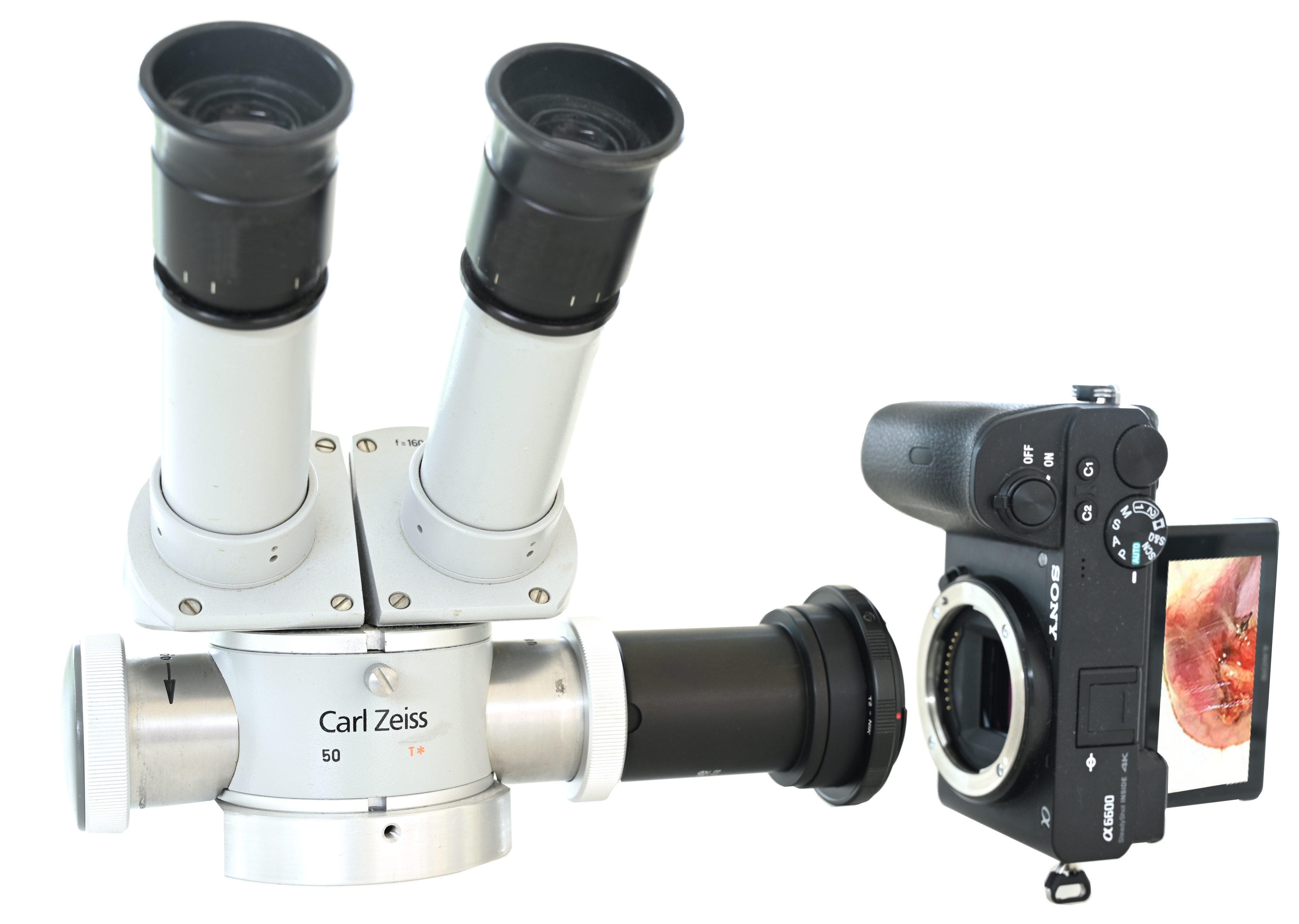
Example application: older slit lamp, Zeiss OPMI slit lamp beam splitter with modern digital camera
Current Zeiss OPMI microscopes:
- Zeiss OPMI pico
- OPMI Vario
- OPMI Lumera
- OPMI Sensera
- OPMI Proergo
- Extaro 300
- Kinevo 900
Older models:
- Zeiss OPMI 1
- OPMI 1 FC
- OPMI 9
- OPMI 9 FC
- OPMI 111 (OPMI 111 S21)
- OPMI VISU
- OPMI P
- OPMI Tec
If interested, we will be pleased to assist you in selecting the optimum adapter and camera. To help you choose the camera that is best suited for your needs, we have put together a guide and a list of camera rankings with up-to-date test reports on our website.
03.02.2026
Photography:
Fitting the microscope to digital single-lens reflex (DSLR), mirrorless interchangeable-lens cameras (MILC ), digital single-lens mirrorless (DSLM) or C-mount cameras is easy with our LM digital SLR adapters, which feature a plan achromatic optical system. Our products make it possible to capture top-quality microscope images. To help you select the adapter that is right for your camera, we have set up an online configurator on our website. You can also email us – ideally with attached photographs of your microscope.
Modern DSLR and single-lens mirrorless (DSLM) offer the latest technology and are generally very well suited for microscopy applications. Most of them can be controlled remotely via PC/Mac. Because of their high sales volumes, they offer an excellent price/performance ratio compared to special-purpose microscope cameras.
Features of top DSLR and single-lens mirrorless cameras (DSLM):
- Large, powerful full-frame sensors (36 x 24 mm)
- Sensor resolution of 61 megapixels or 240 megapixels with Pixel Shift technology
- High light sensitivity (ISO 400,000+)
- Extensive dynamic range (up to 15 aperture stops/f-stops)
- Short exposure times (1/8000 second) up to 1/32,000 seconds using the digital shutter
- 4K Ultra HD or 8K Ultra HD video function
- Live video capture on external monitors in ultra HD quality
In most cases, these cameras are significantly more powerful than microscope cameras with smaller sensors (1/2" or 2/3"). On our website you will find our current camera recommendations and a camera ranking which is specifically tailored to microscopy applications.