


 203
203Macro photography with the Olympus pancake 17 mm lens and the close-up lens LM Macro 80
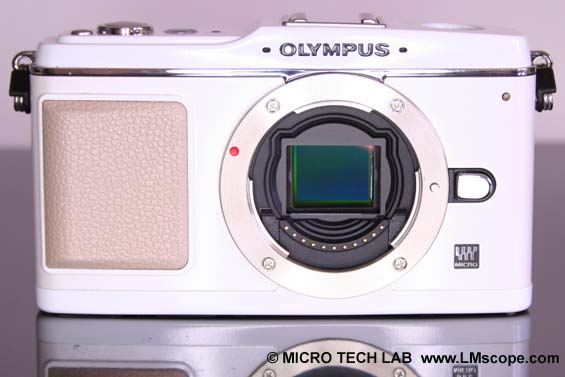
The compact design of the Olympus E-P1 with the ultra-short M.ZUIKO DIGITAL 17 mm 1:2.8 pancake lens with a length of 22 mm makes this system particularly interesting for mobile use. The Olympus E-P1/P2 has a micro four thirds interchangeable lens mount without an SLR mechanism. Due to this modification in design, it has become possible to create a camera that features the high image quality typical of an SLR while at the same time retaining a compact body size. The interchangeable lens mount makes the system extremely flexible, as for each area of application the optimum lens can be selected. The E-P1 has the small dimensions of a compact camera, but offers the performance of a large SLR camera. With an adapter (MMF-1) all four thirds lenses may be used.
Advantages of the Olympus Pen system
- Extremely slim and lightweight with a small design paralleling that of a compact camera
- Extremely small and flat pancake lenses
- Large selection of lenses due to the interchangeable lens mount system
- High image quality equalling that of SLR cameras
- HDMI connection (HD video out)
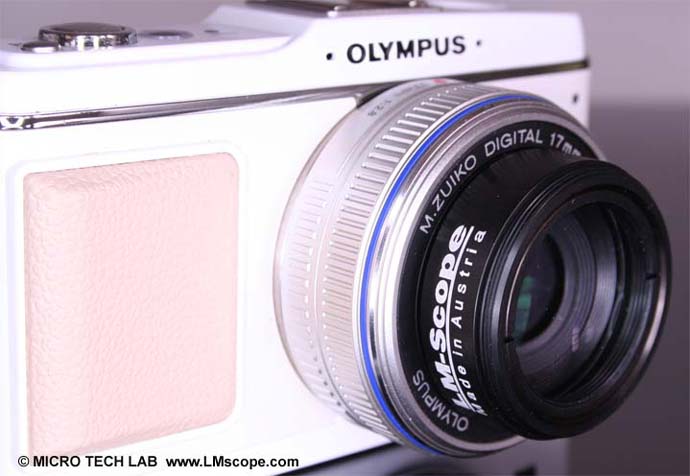
The 80 mm LM Macro 80 transforms the M.ZUIKO DIGITAL 17 mm into a fully-fledged macro system with a magnification of approximately 1:1 at a working distance of 60 mm. The ultra-short pancake lens (22 mm) and the even shorter LM Macro 80 with a length of 18 mm therefore have a combined length of only 40 mm. This short design provides many benefits, especially in mobile use. For stationary use in the laboratory or studio, we offer our macro stands with rack and pinion, which makes it possible to accurately select the optimum focal plane.
 Demo pictures taken with LM DSLR macro lens