


 168
168Setting the parfocality:
How do I ensure that the image is in focus both in the eyepiece and on the camera at the same time?
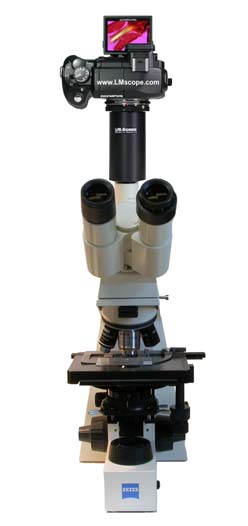
All LM DSLR adapters are equipped with an international standard C-mount connection. This C-mount connection has a flange focal length of 17.52 mm. The flange focal length describes the distance between the microscope’s C-mount connection and the camera’s sensor chip level. If the microscope that you are using also has an international standard C-mount connection thread, then the image will be in focus in both the eyepiece and on the camera display at the same time. If you notice a very large difference between the focus settings, please check the C-mount connection on your microscope. The C-mount connection must have a factor of 1x and may not have any inbuilt optics.
If you determine that this is not the case with your microscope, and it is not possible to refit it with a standard C-mount connection, then photographs can be taken using an ocular tube. For this purpose, one of your microscope’s eyepieces is removed and an LM digital adapter with tube connection is used instead.
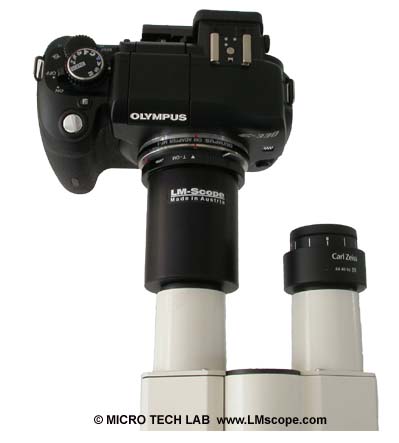
If the difference in focus between the eyepiece and the camera display is wide, then we recommend to use a focusable LM DSLR Universaladapter.
If the difference in focus between the eyepiece and the camera display is only very small, then the following optimization options are available:
1. If you possess a microscope with focusable observation tubes, they can be used to align the focus. First bring the image into focus on the camera display, then look through the eyepiece and focus the image.
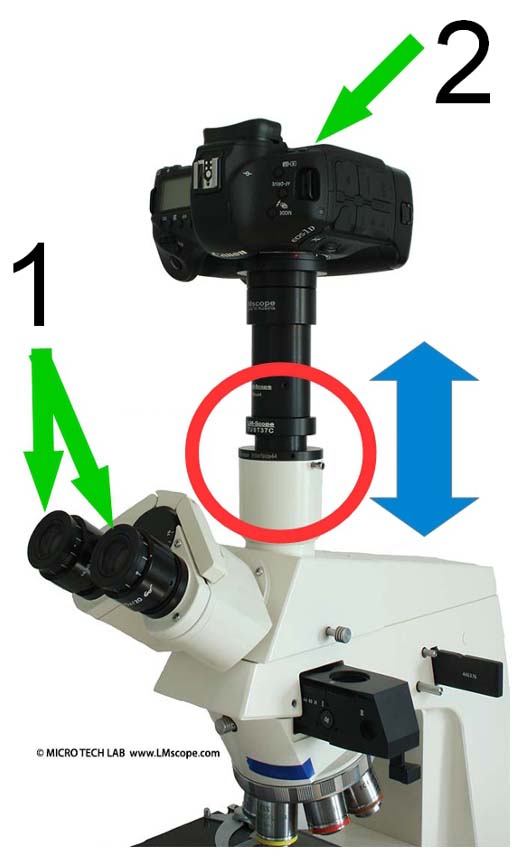
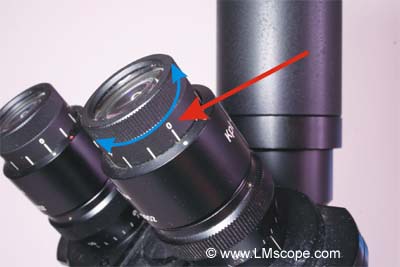
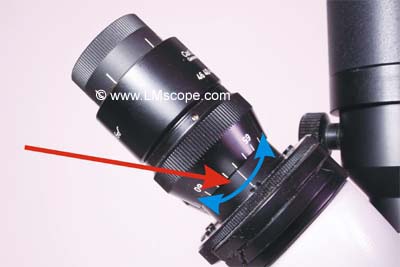
2. If your microscope is not equipped with focusable observation tubes, but does have eyepieces with dioptre adjustment, then the focus can be aligned using them. Bring the image into focus on the camera display, then look through your eyepiece and focus the image using the dioptre adjustment
Update: 15.07.2014
Caution! This manual is protected by copyright. Unauthorised reproduction thereof, in whole or in part, is punishable by law. Only use with MICRO TECH LAB’s approval.
New LM Digital Adapter for: Nikon Z9 / Nikon Z8 / Nikon D6 / Nikon Z6III / Nikon Z6 / Nikon Z6II / Nikon Z7 / Nikon Z7II / Nikon Z5 / Nikon Z50 II / Nikon Z50 / Nikon Z30 / Nikon Z fc / Nikon D850 / Nikon D780 / Nikon D5 / Nikon D4s / Nikon D4 / Nikon D750 / Nikon D500 / Nikon D810 / Nikon D800 / Nikon D800E / Nikon Df / Nikon D610 / Nikon D600 / Nikon D7200 / Nikon DS-Qi2 (Microscope Camera) / Nikon D3x / Nikon D3S / Nikon D7100 / Nikon D7000 / Nikon DS-Ri2 (Microscope Camera) / Nikon D7500 / Nikon D700 / Nikon D3 / Nikon D5500 / Nikon D5200 / Nikon D5300 / Nikon D300 / Nikon D3500 /